

Cerebral Circulation and Anesthesia: Essential Insights for Optimal Patient Care
Introduction The brain is an organ of immense complexity, requiring a robust blood supply to function correctly. Cerebral circulation is essential for delivering... Read more.
Ventilation Strategies During “Open Airway” Phase
Introduction: Anesthesia is a critical component of tracheal surgery, particularly during the “open airway” phase. Ensuring adequate ventilation while... Read more.
Understanding Newton’s First Law of Motion in Anesthesia: The Law of Inertia
Newton’s first law of motion, often referred to as the law of inertia, states that an object will remain at rest or in uniform motion in a straight line unless... Read more.
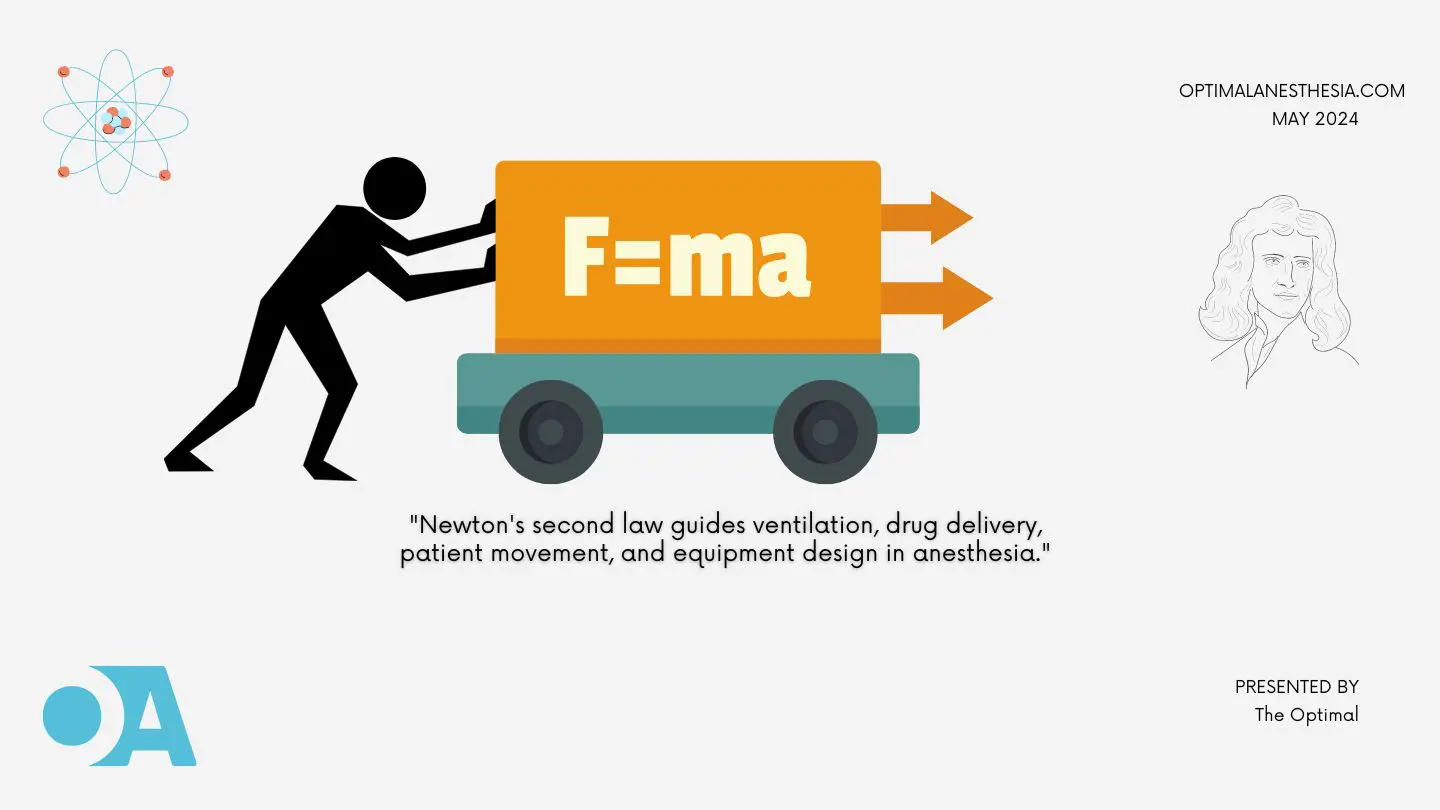
Newton’s Second Law in Anesthesia
Newton’s second law of motion, F=maF=ma, is a foundational principle in physics that has broad applications in anesthesia, particularly concerning patient... Read more.
Elaboration on Newton’s Third Law in Anesthesia: Understanding Action and Reaction
Newton’s third law of motion states that for every action, there is an equal and opposite reaction. In the field of anesthesia, this fundamental principle... Read more.

The Role of Serum Renin in the Perioperative Period
Introduction Serum renin is a crucial enzyme in the renin-angiotensin-aldosterone system (RAAS) that plays a significant role in regulating blood pressure and fluid-electrolyte... Read more.